
Introduction
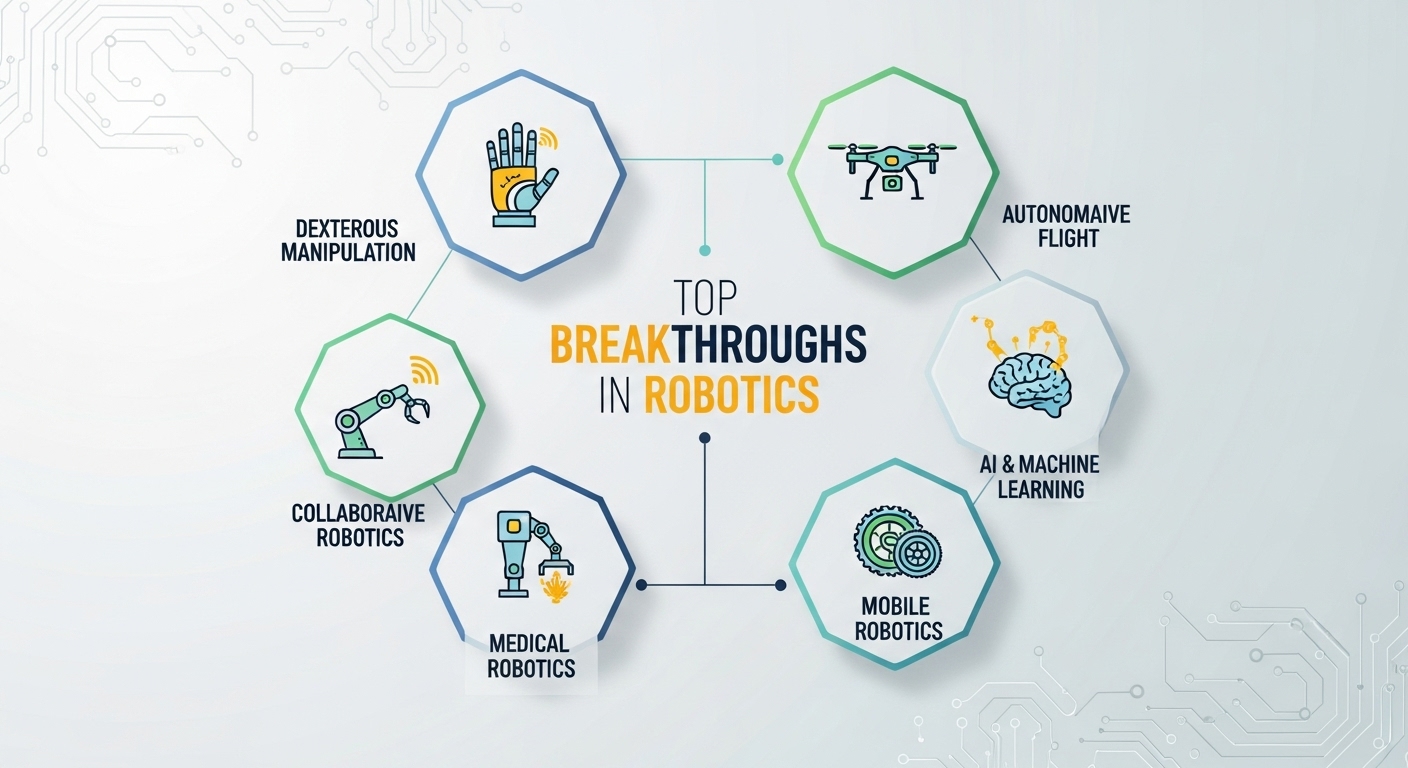
Robotics has long fascinated humanity, bridging the gap between imagination and reality. What was once the subject of science fiction stories is now a field that actively transforms industries, daily life, and even human perception of work and creativity. From mechanical arms in factories to advanced humanoids capable of mimicking human emotions, robotics has reached levels that were unthinkable a few decades ago. The top breakthroughs in robotics highlight not just technological achievement but also the human desire to push boundaries and create machines that can extend capabilities, improve safety, and unlock new possibilities.
The evolution of robotics is a story of innovation, perseverance, and collaboration. Each breakthrough builds on years of research, blending advances in artificial intelligence, engineering, and material science. Today, robots can learn, adapt, and operate in complex environments. Exploring these breakthroughs gives us a glimpse of how far humanity has come and where the future might lead.
The Birth of Industrial Robotics
The first major breakthrough in robotics came with the introduction of industrial robots in the mid-twentieth century. The creation of robotic arms such as the Unimate in the 1960s revolutionized manufacturing. Unimate, used by General Motors, could perform repetitive and hazardous tasks with consistency and precision. This marked the beginning of a new era where machines worked alongside humans to increase productivity and reduce risks in dangerous environments.
Industrial robots have since evolved into sophisticated systems capable of assembling electronics, welding car parts, and packaging consumer goods. The automation provided by these robots laid the foundation for modern mass production, making products cheaper, more reliable, and widely available. This breakthrough not only transformed industries but also shaped the global economy by changing how goods are produced and distributed.
The Rise of Humanoid Robots
While industrial robots excelled in specific tasks, the creation of humanoid robots represented a significant leap toward replicating human abilities. Humanoid robots are designed to resemble and act like humans, both in appearance and movement. Japan has been a leader in this area, developing robots such as ASIMO by Honda, which could walk, climb stairs, and interact with people.
Humanoid robots are more than just engineering marvels; they serve as platforms for research into human-robot interaction. Their design makes them suitable for assisting in environments built for humans, such as homes, hospitals, and offices. Breakthroughs in humanoid robotics have paved the way for robots that can provide companionship, care for the elderly, and serve as customer service assistants. They also reflect an ongoing pursuit of creating machines that seamlessly integrate into human environments.
Robotics in Medicine and Surgery
One of the most impactful breakthroughs in robotics has been in the field of healthcare. Surgical robots such as the da Vinci system have transformed the way doctors perform operations. These robots allow surgeons to carry out minimally invasive procedures with greater precision and control. Robotic-assisted surgery reduces patient recovery times, minimizes risks of complications, and enhances outcomes for a wide range of medical conditions.
Robotics has also contributed to rehabilitation medicine through the development of robotic exoskeletons. These wearable devices help patients regain mobility after spinal injuries or strokes by providing mechanical support and encouraging movement. Robotic prosthetics represent another breakthrough, using advanced sensors and AI to create artificial limbs that mimic natural motion and even respond to nerve signals. Such innovations not only restore physical function but also improve quality of life for millions of people worldwide.
Autonomous Robots and Self-Navigation
The ability of robots to operate autonomously without constant human control marks another critical breakthrough. Autonomous robots are capable of perceiving their environment, making decisions, and carrying out tasks on their own. This development has been crucial in fields ranging from exploration to everyday services.
In space exploration, autonomous rovers like those sent to Mars have operated for years in harsh conditions, gathering data and performing experiments far from human reach. On Earth, autonomous drones are used for delivery services, agriculture, and environmental monitoring. These machines can map terrain, avoid obstacles, and adapt to changing conditions in real time.
Self-navigation breakthroughs also extend to self-driving cars, which represent one of the most ambitious applications of autonomous robotics. By combining sensors, cameras, and AI, these vehicles aim to transform transportation, making it safer, more efficient, and accessible. While challenges remain, the progress achieved so far underscores the potential of autonomous robotics to reshape mobility and logistics.
Soft Robotics and Flexible Designs
Traditional robots have often been rigid and mechanical, limiting their ability to interact safely with delicate objects or living beings. The emergence of soft robotics represents a breakthrough that addresses this limitation. Soft robots are made from flexible materials such as silicone and rubber, allowing them to move more like natural organisms.
These robots excel in tasks that require gentleness, such as handling fragile produce in agriculture or assisting in surgeries that demand delicate touch. Soft robotics also plays an important role in creating wearable devices that conform to the human body, providing comfort and adaptability. The design inspiration often comes from nature, with robots mimicking the movements of animals like octopuses or worms. This biomimicry allows robots to operate in environments where traditional machines would fail, such as underwater exploration or disaster recovery in collapsed buildings.
Collaborative Robots or Cobots
The rise of collaborative robots, commonly known as cobots, marks a turning point in how robots and humans interact in workplaces. Unlike traditional industrial robots that are often isolated from human workers for safety reasons, cobots are designed to work alongside people. They are equipped with advanced sensors and safety features that allow them to detect human presence and adjust their behavior to avoid accidents.
Cobots are particularly valuable in small and medium-sized businesses where full automation may not be feasible. They assist workers with repetitive or physically demanding tasks while allowing humans to focus on more complex or creative work. This collaboration has enhanced productivity and safety across industries while also demonstrating that robots need not replace humans but can instead complement their abilities.
Breakthroughs in AI and Machine Learning Integration
A major driver behind recent advances in robotics is the integration of artificial intelligence and machine learning. Early robots were limited by pre-programmed instructions, making them rigid and unable to adapt to new situations. With AI, robots can now learn from data, recognize patterns, and improve their performance over time.
Machine learning allows robots to identify objects, understand natural language, and even predict human intentions. For example, service robots in retail or hospitality use AI to interact with customers in meaningful ways. In manufacturing, AI-powered robots can adapt to changes in product design without requiring complete reprogramming. This adaptability has made robots more versatile, scalable, and capable of handling complex tasks.
Robotics in Agriculture
Agriculture has benefited tremendously from breakthroughs in robotics. Farming robots are designed to plant seeds, monitor crop health, and harvest produce with efficiency and precision. Drones equipped with sensors and cameras analyze soil conditions and detect pest infestations, allowing farmers to optimize resources and increase yields.
Robotic harvesters, capable of picking fruits and vegetables without damaging them, represent a significant innovation. These robots address labor shortages in agriculture while ensuring consistent quality. Automated systems that manage irrigation and fertilization also help conserve resources and promote sustainable farming practices. The application of robotics in agriculture is helping to meet the growing global demand for food while minimizing environmental impact.
Robotics in Disaster Response
Robotics has proven invaluable in disaster response, where human intervention may be dangerous or impossible. Search-and-rescue robots are designed to navigate rubble after earthquakes, locate survivors, and deliver supplies. Drones provide aerial assessments of disaster zones, identifying safe routes and assessing damage.
One breakthrough in this field is the development of snake-like robots that can slither through narrow spaces to reach trapped individuals. These robots are equipped with cameras and sensors to transmit vital information to rescue teams. In hazardous environments such as nuclear accidents or chemical spills, robots minimize human exposure while performing critical tasks. These innovations demonstrate the life-saving potential of robotics in emergency situations.
Robotics in Everyday Life
Robotics has also entered daily life, providing convenience and assistance in homes and personal spaces. Robotic vacuum cleaners and lawnmowers automate household chores, freeing up time for individuals and families. Companion robots provide emotional support to the elderly or those living alone, demonstrating the growing role of robotics in personal well-being.
Educational robots are increasingly used to teach children programming, problem-solving, and creativity. By engaging students through interactive play, these robots make learning fun and accessible. Robotics in everyday life illustrates how far the field has advanced from its industrial roots, becoming a familiar part of households worldwide.
Challenges and Ethical Considerations
While the breakthroughs in robotics are impressive, they also raise important questions about ethics, safety, and the future of work. One major concern is the potential displacement of human labor. As robots take on more tasks, some jobs may become obsolete, leading to economic and social challenges. It is essential to prepare for these changes through education, training, and policies that support workers in transition.
Ethical issues also arise in areas such as healthcare, where robots may be making life-altering decisions, or in defense, where autonomous weapons present moral dilemmas. Ensuring that robotics is developed and used responsibly requires global cooperation, transparent regulations, and ongoing dialogue between technologists, policymakers, and the public.
Privacy is another concern, as robots equipped with cameras and sensors may collect sensitive data. Striking a balance between innovation and individual rights is crucial for maintaining trust in robotic technologies.
The Future of Robotics
Looking ahead, the future of robotics promises even greater breakthroughs. Advances in artificial intelligence, materials science, and energy efficiency will lead to robots that are more intelligent, adaptable, and capable. The development of swarm robotics, where large groups of small robots work together like colonies of ants, could revolutionize fields from construction to space exploration.
Human-robot collaboration will continue to evolve, with robots becoming trusted partners in workplaces, schools, and homes. As technology advances, the line between human and machine may blur further, especially with the integration of robotics into wearable devices and implants.
The future will also demand thoughtful consideration of how to ensure robotics benefits society as a whole. By focusing on ethical use, inclusivity, and sustainability, the rise of robotics can address pressing global challenges while enhancing quality of life.
Conclusion
The story of robotics is a testament to human creativity and ambition. From the earliest industrial arms to the advanced autonomous systems of today, each breakthrough has brought humanity closer to realizing visions once thought impossible. Robotics now touches nearly every aspect of life, from healthcare and agriculture to disaster response and personal convenience. These machines are not merely tools; they are partners that extend human potential and reshape what is possible.
The top breakthroughs in robotics highlight both the achievements already made and the opportunities yet to come. They remind us that while technology advances rapidly, the responsibility to guide its development lies with society. By harnessing robotics thoughtfully and ethically, humanity can ensure that these breakthroughs serve as milestones not just of technological progress but of collective human advancement.