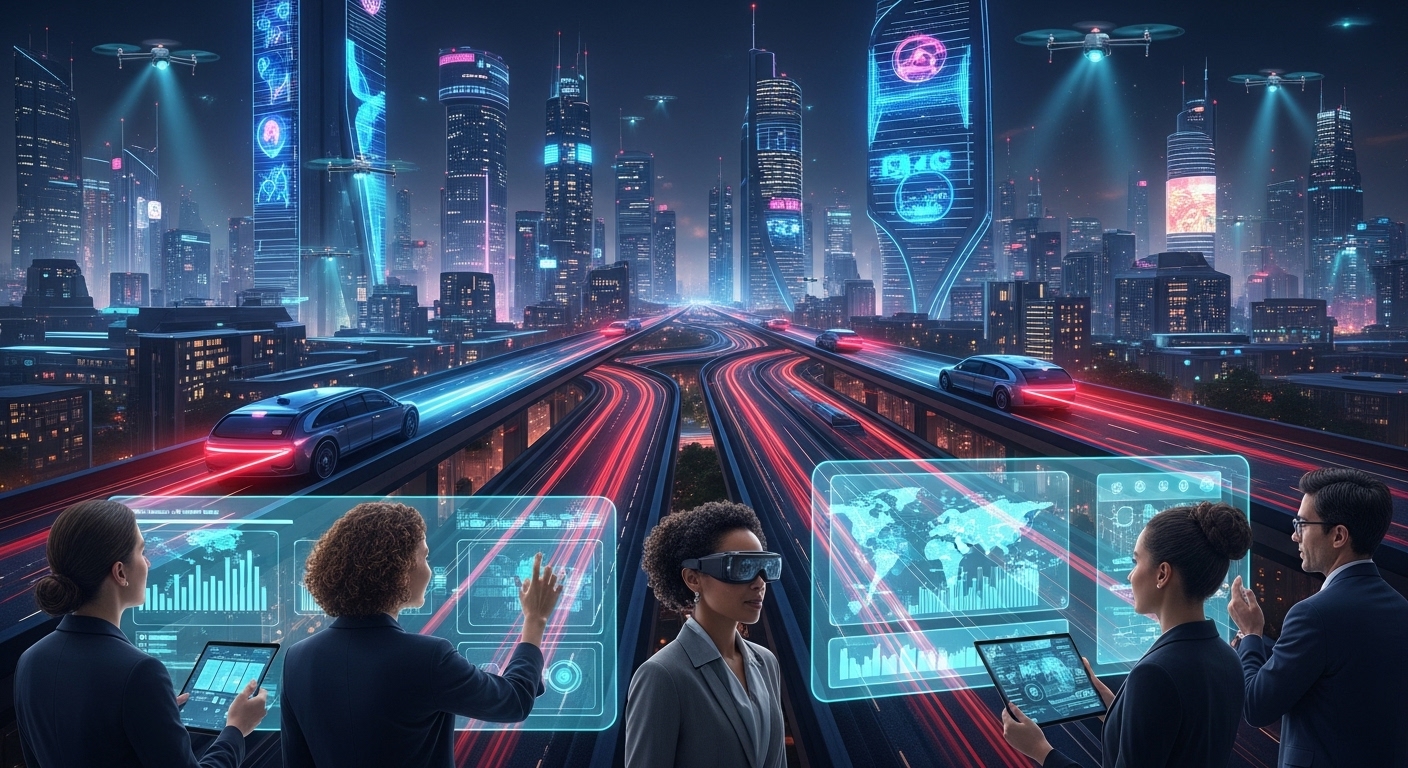

In the ever-evolving world of technology, the present is often overshadowed by the potential of what lies ahead. Whether we are talking about artificial intelligence, quantum computing, or advancements in biotechnology, the pace at which technology is transforming our lives is nothing short of astounding. We are on the verge of breakthroughs that will redefine our daily existence, challenging our understanding of what is possible. This blog post delves into how technology is influencing the future, its current trajectory, and the far-reaching implications for industries, society, and even human identity itself.
The Acceleration of Technological Advancement
We are living in an era where technological advancements are occurring at an unprecedented pace. The exponential growth of technology is driven by a combination of factors: faster processing power, increased connectivity, a surge in data generation, and groundbreaking research in various fields. In just a few decades, we’ve witnessed the rise of the internet, smartphones, artificial intelligence, and virtual reality — all of which have changed the way we live, work, and communicate.
The Impact of Moore’s Law
Moore’s Law, first observed in 1965 by Gordon Moore, co-founder of Intel, states that the number of transistors on a microchip doubles approximately every two years, leading to an exponential increase in computing power. While the physical limits of Moore’s Law may eventually be reached, this phenomenon has fueled decades of rapid technological advancement, enabling the digital revolution. As processing power continues to grow, the possibilities for innovation expand, enabling previously unimaginable technologies like machine learning, autonomous vehicles, and even personalized medicine.
Artificial Intelligence and Machine Learning: The Next Frontier
One of the most exciting and transformative developments in technology today is artificial intelligence (AI) and its subset, machine learning (ML). These technologies are not just science fiction anymore; they are part of our daily lives. From virtual assistants like Siri and Alexa to recommendation algorithms on streaming platforms, AI is already influencing a vast array of industries.
The Rise of Automation and Smart Systems
AI is leading the charge in automation. While automation has been around for decades in manufacturing, AI brings a new level of sophistication. Today, robots and machines are not just executing repetitive tasks; they are learning, adapting, and making decisions based on vast amounts of data. This has implications across industries from healthcare to transportation to entertainment. For instance, self-driving cars, powered by AI, could soon revolutionize the transportation industry, reducing accidents, easing traffic congestion, and even transforming urban planning.
Beyond automation, AI systems are becoming smarter and more capable of performing complex tasks that were once thought to require human intelligence. From AI-driven chatbots in customer service to AI-powered diagnostics in healthcare, these systems are making everyday processes more efficient, cost-effective, and accurate.
Machine Learning’s Role in Personalization
Machine learning, a subset of AI, is helping companies provide more personalized experiences to users. Online platforms like Netflix, Amazon, and Spotify leverage machine learning algorithms to recommend products, movies, and songs based on past behavior. But personalization extends beyond entertainment. In healthcare, machine learning is being used to develop personalized treatment plans based on individual genetic profiles. In education, AI-powered platforms are being used to adapt teaching methods to the learning styles of individual students, making learning more effective.
The Quantum Leap: Quantum Computing
While AI and machine learning are changing the landscape today, quantum computing promises to revolutionize technology in ways that are still largely theoretical. Quantum computing harnesses the principles of quantum mechanics to perform calculations at speeds far beyond those achievable by classical computers. This could unlock new possibilities in fields such as cryptography, materials science, and even medicine.
What Makes Quantum Computing Different?
At the core of quantum computing is the qubit (quantum bit), which can exist in multiple states simultaneously, unlike classical bits, which are either 0 or 1. This superposition allows quantum computers to perform complex calculations exponentially faster than their classical counterparts. For instance, a quantum computer could potentially solve problems that would take traditional computers millions of years to complete in a matter of seconds.
While the full-scale application of quantum computing is still in its infancy, researchers are optimistic about its potential to solve problems that are currently intractable. This includes breaking cryptographic codes, simulating complex molecules for drug discovery, and optimizing logistics on an enormous scale.
Biotechnology: Merging Biology with Technology
Biotechnology is an area where technology is making rapid strides, blurring the lines between the biological and technological worlds. Innovations in this field are set to improve healthcare, agriculture, and environmental sustainability in ways we never thought possible.
Gene Editing: A New Era in Medicine
One of the most groundbreaking advancements in biotechnology is gene editing, specifically the development of CRISPR-Cas9 technology. This revolutionary tool allows scientists to precisely alter DNA, opening the door to potential cures for genetic diseases, cancer, and even aging. For instance, CRISPR has shown promise in correcting genetic mutations that cause diseases like sickle cell anemia and cystic fibrosis.
While the potential benefits of gene editing are immense, ethical considerations surrounding the manipulation of the human genome remain a topic of debate. Scientists and policymakers are working together to create frameworks that balance innovation with responsibility, ensuring that these technologies are used for the greater good.
Biotechnology in Agriculture
Biotechnology is also transforming agriculture, with genetic modifications allowing crops to resist pests, tolerate harsh weather conditions, and even provide enhanced nutritional value. The development of genetically modified organisms (GMOs) has already led to more efficient farming practices, higher yields, and reduced reliance on pesticides. In the future, biotechnological advances could play a crucial role in addressing global food security as the world’s population continues to grow.
The Internet of Things (IoT): Connecting the World
The Internet of Things (IoT) refers to the network of physical devices—such as smartphones, wearables, home appliances, and vehicles—that are connected to the internet and to each other. This interconnectedness is reshaping industries and daily life by creating smarter environments and enabling greater convenience.
Smart Homes and Cities
In the home, IoT devices like smart thermostats, security cameras, and voice-controlled assistants are becoming increasingly popular, providing convenience, efficiency, and safety. But the impact of IoT extends beyond individual households. In cities, IoT is enabling the development of “smart cities,” where sensors monitor everything from traffic patterns to air quality, optimizing the use of resources and improving the quality of life for residents.
For example, smart traffic lights can adjust in real time based on traffic flow, reducing congestion and emissions. Similarly, IoT-connected waste bins can alert municipalities when they are full, improving waste management efficiency. The possibilities for IoT in urban planning are vast, and we are only scratching the surface.
Wearables and Health Monitoring
Wearable technology, another key component of the IoT, is changing the way we monitor and manage our health. Fitness trackers, smartwatches, and medical devices are now capable of collecting a vast array of data about an individual’s health, such as heart rate, sleep patterns, and even blood oxygen levels. This data can be analyzed to provide insights into personal health trends, and in some cases, to detect early signs of potential health issues.
Healthcare professionals can also use IoT-connected devices to monitor patients remotely, offering more personalized care and reducing the need for in-person visits. This is especially valuable in managing chronic conditions and for elderly patients who require constant monitoring.
The Ethical Implications of Technology
As we march forward into this brave new world, it’s important to recognize the ethical dilemmas that come with technological advancement. Many of these technologies, from AI to genetic editing, present challenges related to privacy, security, and inequality.
Privacy and Data Security
With the increasing amount of personal data being collected by IoT devices, wearables, and online platforms, privacy and security concerns are more prominent than ever. Data breaches, identity theft, and unauthorized surveillance are significant risks in a hyper-connected world. Moreover, the rise of AI-driven surveillance systems could lead to the erosion of personal freedoms and autonomy.
Inequality and Access
Technological advancements can also exacerbate existing inequalities. While access to technology can provide opportunities for education, healthcare, and employment, those without access to the latest technology risk being left behind. Ensuring equitable access to emerging technologies will be crucial to preventing further societal divides.
Conclusion: Embracing the Future Responsibly
As technology continues to evolve, it holds the promise of a future that is more connected, efficient, and intelligent. From AI to quantum computing, biotechnology to IoT, the innovations on the horizon will fundamentally reshape every aspect of our lives. However, with great power comes great responsibility. We must ensure that these technologies are developed and implemented in ways that are ethical, equitable, and sustainable. The future is bright, but it is up to us to navigate it wisely, harnessing the potential of technology while addressing the challenges it presents.