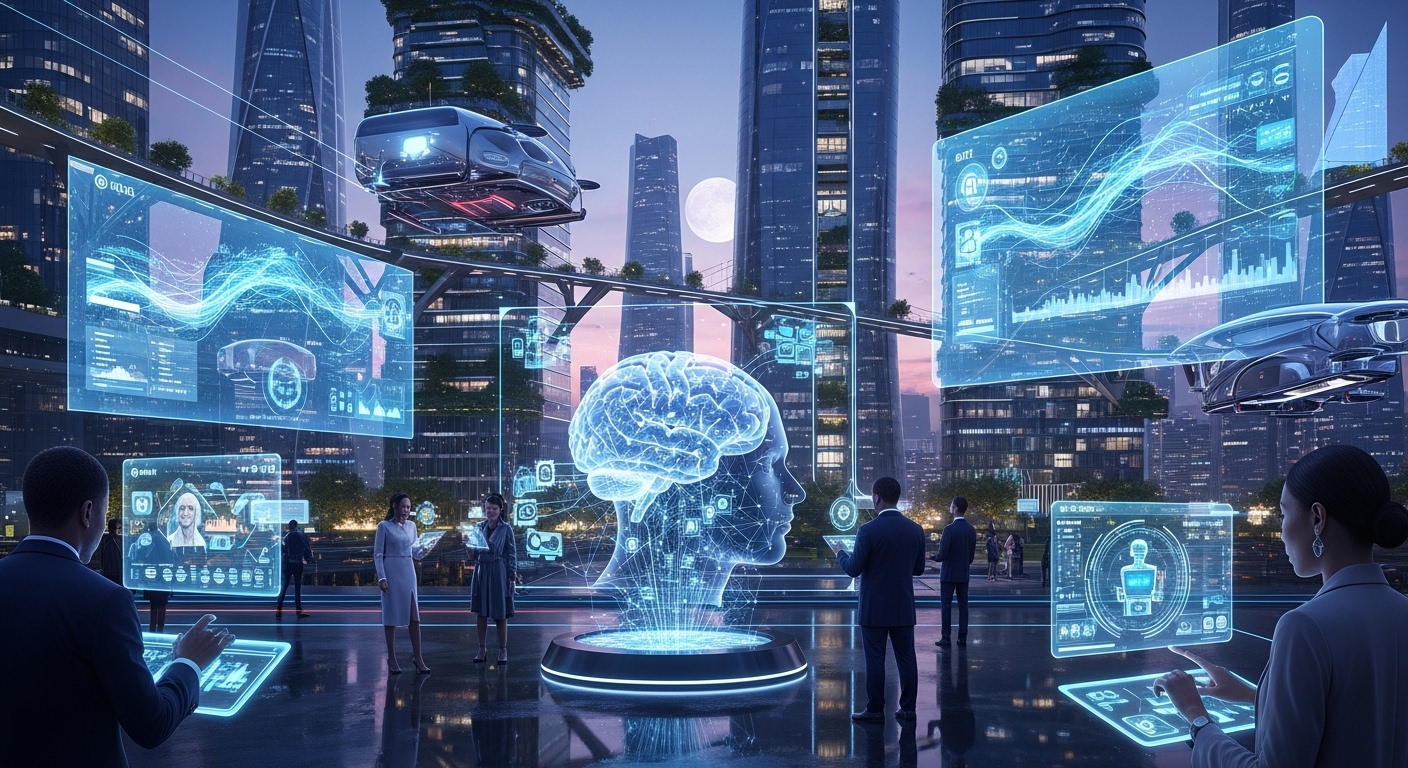
Technology has always played a pivotal role in shaping human history. From the invention of the wheel to the development of the internet, technological advancements have driven progress, revolutionized industries, and reshaped societies. In the 21st century, technology has reached unprecedented levels of sophistication and continues to evolve at an exponential rate. Emerging fields such as artificial intelligence (AI), quantum computing, blockchain, the Internet of Things (IoT), and biotechnology are not only changing the way we live but are also pushing the boundaries of what is possible. In this blog post, we will explore the major technological advancements currently shaping our world, their potential impact on the future, and the ethical implications they bring.
The Rise of Artificial Intelligence (AI)
Artificial intelligence (AI) is perhaps the most transformative technology of the modern era. AI refers to the development of machines and systems that can perform tasks typically requiring human intelligence. These tasks include reasoning, learning from experience, problem-solving, understanding natural language, and visual perception. AI is already making significant strides across various industries, and its applications are diverse, ranging from self-driving cars to virtual assistants like Siri and Alexa.
One of the most significant contributions of AI has been in the field of machine learning, a subset of AI that allows systems to learn from large datasets and improve over time without being explicitly programmed. Machine learning has fueled the development of systems that can predict trends, detect anomalies, and automate tasks with incredible efficiency.
In healthcare, AI-powered algorithms are already being used to analyze medical data, such as radiology images and genetic sequences, to diagnose diseases like cancer at early stages. Machine learning models are also being used in drug discovery, helping researchers identify promising drug candidates more quickly.
AI is also playing a major role in automation. From manufacturing to customer service, AI is driving efficiencies by automating repetitive tasks. Robots and AI systems are performing functions that were once handled by humans, leading to faster production times, lower costs, and more personalized customer experiences.
Despite the promise AI holds, there are significant challenges to address. One of the primary concerns is the potential for job displacement. As AI continues to evolve, many jobs in fields like transportation, retail, and administration may be at risk of being automated. Policymakers and business leaders must work together to ensure that workers are equipped with the skills they need to thrive in a more automated world.
Another concern is the ethical implications of AI decision-making. As AI systems become more involved in critical areas like criminal justice, healthcare, and hiring, it is essential to ensure that these systems are transparent, fair, and free from bias. The algorithms that drive AI systems are only as good as the data they are trained on, and if that data reflects biases, it could lead to unfair outcomes.
Quantum Computing: The Next Frontier
Quantum computing is one of the most exciting fields in technology today. While classical computers process information in binary form (0s and 1s), quantum computers use quantum bits, or qubits, which can exist in multiple states simultaneously. This ability to perform multiple calculations at once enables quantum computers to solve problems that are currently beyond the capabilities of classical computers.
Quantum computing holds the potential to revolutionize industries such as cryptography, material science, and artificial intelligence. In the realm of cryptography, quantum computers could break existing encryption methods, which are based on the difficulty of factoring large numbers. This has led to a race to develop quantum-resistant encryption algorithms that would be secure even against the power of quantum computers.
In material science, quantum computers could simulate molecular interactions with far greater accuracy than current supercomputers, potentially leading to the discovery of new materials for use in everything from renewable energy production to advanced electronics. The development of new materials with properties tailored to specific needs could revolutionize industries ranging from healthcare to aerospace.
Despite the immense potential of quantum computing, the field is still in its infancy. Researchers are working to develop stable qubits and error correction techniques to make quantum computers more practical. While quantum computers have already been used to solve small problems, it may still be years, if not decades, before they are ready for widespread commercial use.
The Internet of Things (IoT) and Smart Cities
The Internet of Things (IoT) refers to the growing network of interconnected devices that can communicate with each other and share data. These devices range from everyday objects like smart thermostats and wearable fitness trackers to industrial sensors used in manufacturing and agriculture. As more devices become connected, the potential for IoT to transform industries and everyday life becomes increasingly apparent.
In the consumer sector, IoT devices are making it easier to automate everyday tasks. Smart homes, for instance, allow users to control lighting, temperature, security, and even appliances with their smartphones or voice assistants. These devices learn users’ habits and preferences over time, improving efficiency and convenience.
In the industrial sector, IoT is driving the concept of “Industry 4.0.” Manufacturing facilities are now equipped with sensors that monitor machine performance, track inventory, and detect faults in real-time. This enables predictive maintenance, reducing downtime and improving productivity. Similarly, in agriculture, IoT sensors can monitor soil moisture levels, temperature, and crop health, allowing farmers to optimize irrigation and improve crop yields.
One of the most exciting applications of IoT is the development of smart cities. Smart cities use IoT technology to improve the quality of life for residents by optimizing public services and infrastructure. For example, traffic lights can be synchronized to reduce congestion, and waste management systems can track garbage bins’ fill levels and optimize collection routes. IoT is also being used to monitor air quality and manage energy consumption more efficiently.
However, the widespread adoption of IoT presents significant challenges. One of the most pressing concerns is security. With millions of interconnected devices generating vast amounts of data, the potential for cyberattacks increases. Hackers could exploit vulnerabilities in IoT devices to gain access to sensitive personal information or disrupt critical infrastructure. Securing IoT networks will require strong encryption, secure communication protocols, and continuous monitoring for vulnerabilities.
Blockchain Technology: Redefining Trust and Security
Blockchain technology is perhaps best known for its association with cryptocurrencies like Bitcoin, but its potential extends far beyond digital currency. At its core, blockchain is a decentralized, distributed ledger that allows transactions to be recorded securely and transparently. Each block in the chain contains a list of transactions, and once a block is added to the chain, it cannot be altered, ensuring the integrity of the data.
Blockchain’s potential to disrupt industries lies in its ability to provide a secure, transparent way to record and verify transactions without the need for intermediaries. This makes it particularly useful in areas like finance, supply chain management, and healthcare.
In the financial sector, blockchain can be used to create more efficient and secure payment systems. Traditional banking systems are often slow and expensive, especially for international transactions. Blockchain-based payment systems, such as Ripple, offer the potential for faster, cheaper, and more secure cross-border payments.
In supply chain management, blockchain can be used to track the movement of goods from production to delivery, providing greater transparency and accountability. This can help reduce fraud, ensure product authenticity, and improve the efficiency of the supply chain.
Blockchain is also being explored in the healthcare industry to securely store and share patient data. By using blockchain, healthcare providers can ensure that patient records are tamper-proof and accessible only to authorized individuals. This could improve patient privacy and reduce the risk of data breaches.
Despite its promise, blockchain technology is still in the early stages of adoption. One of the main challenges is scalability. Blockchain networks can become slow and inefficient as the number of transactions increases. Additionally, there are concerns about the environmental impact of blockchain’s proof-of-work consensus mechanism, which requires significant computational power.
Biotechnology: Advancing Healthcare and Agriculture
Biotechnology is another rapidly advancing field that is revolutionizing healthcare, agriculture, and environmental sustainability. At the heart of biotechnology is the manipulation of living organisms or their components to develop products and technologies that improve human health and well-being.
One of the most exciting breakthroughs in biotechnology is gene editing. The development of CRISPR-Cas9 technology has made it possible to edit genes with unprecedented precision. This technology holds the potential to cure genetic diseases by correcting mutations at the DNA level. In addition, CRISPR could be used to create genetically modified organisms (GMOs) with enhanced traits, such as crops that are resistant to drought or pests.
In healthcare, biotechnology is enabling the development of personalized medicine. By analyzing a patient’s genetic makeup, doctors can tailor treatments to their individual needs, improving the effectiveness of therapies and reducing the risk of side effects. Biotechnology is also driving advancements in regenerative medicine, such as stem cell therapy and tissue engineering, which could one day allow for the growth of replacement organs.
In agriculture, biotechnology is being used to develop crops that are more resilient to environmental stresses, pests, and diseases. Genetically modified crops have already led to increased yields and reduced pesticide use, helping to meet the growing demand for food as the global population continues to rise.
While biotechnology holds immense potential, it also raises ethical questions. The ability to edit genes raises concerns about “designer babies,” where genetic modifications could be made to enhance physical or intellectual traits. There are also environmental concerns about the long-term effects of genetically modified organisms on ecosystems.
Ethical and Social Implications of Technological Advancements
As technology continues to evolve, it is crucial to consider the ethical and social implications of these advancements. The rapid pace of change presents both opportunities and challenges, and it is essential to ensure that technological progress benefits all members of society.
One of the most significant ethical concerns is the potential for job displacement. As automation and AI continue to advance, many jobs traditionally performed by humans may be replaced by machines. This raises questions about the future of work and how society will support workers who are displaced by technology. Education and retraining programs will be essential to help workers transition to new roles in an increasingly automated world.
Another concern is the impact of technology on privacy. With the rise of IoT, AI, and big data, vast amounts of personal information are being collected, analyzed, and stored. While this data can be used to improve products and services, it also raises concerns about surveillance, data breaches, and the loss of individual privacy. It is essential for governments and organizations to develop robust privacy laws and data protection measures to safeguard citizens’ rights.
Finally, there are ethical questions about the responsible use of emerging technologies like AI and biotechnology. As AI systems become more involved in decision-making, there is a need for transparency, accountability, and fairness in their design and implementation. Similarly, the development of gene editing technologies like CRISPR raises concerns about the potential for misuse and unintended consequences.
Conclusion: Embracing the Technological Future
The future of technology is both exciting and uncertain. From AI and quantum computing to blockchain and biotechnology, technological advancements are transforming industries, improving lives, and reshaping the way we interact with the world. However, with these advancements come ethical, social, and economic challenges that must be addressed to ensure that technology is used for the greater good.
As we look ahead, it is clear that technology will continue to drive innovation and progress. The key will be to embrace these changes responsibly, ensuring that the benefits of technological advancements are shared equitably while addressing the potential risks. By doing so, we can build a future where technology enhances human potential and contributes to a more sustainable and just world.