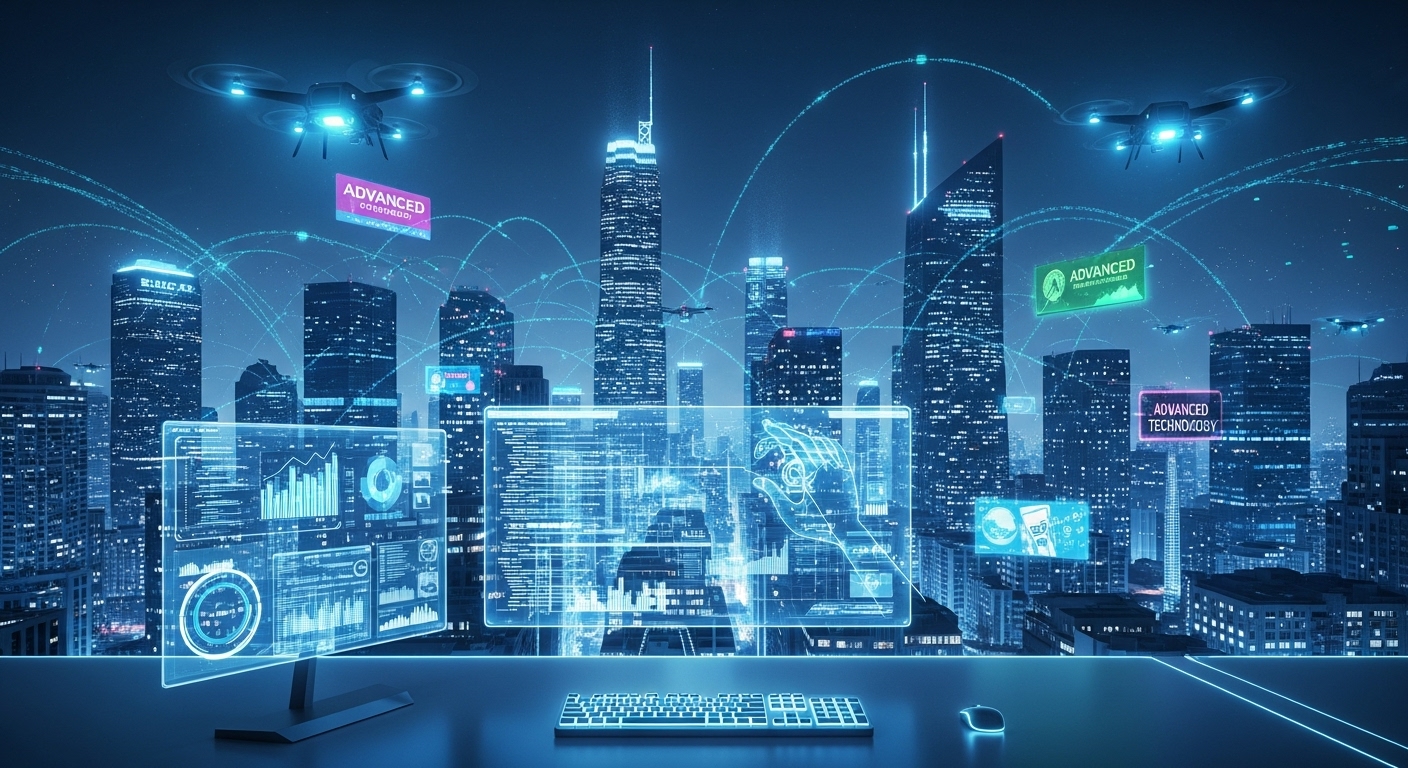
The rapid pace of technological advancement is fundamentally reshaping the world we live in, offering both exciting opportunities and significant challenges. Over the last few decades, the growth in technology has been nothing short of remarkable, transforming industries, economies, and personal lives. From artificial intelligence (AI) to quantum computing, and from virtual reality (VR) to blockchain, the horizon is filled with possibilities. In this post, we explore the trajectory of modern technology, its impact on society, and what the future holds for innovation.
The Rise of Artificial Intelligence: Beyond Automation
Artificial intelligence has become one of the most talked-about technologies of the 21st century. Initially, AI was primarily associated with automation, aimed at replacing human labor in repetitive tasks. However, the scope of AI has expanded significantly in recent years. Today, AI is not just about doing tasks faster; it’s about enhancing human capabilities, making complex decisions, and even solving problems that were once thought to be beyond the reach of machines.
One of the most striking developments in AI is machine learning, where algorithms allow machines to improve their performance through experience without being explicitly programmed. This ability has paved the way for innovations in various fields, from healthcare to finance and beyond. For instance, in medicine, AI is revolutionizing diagnostics by helping doctors identify diseases such as cancer with greater accuracy and speed. In finance, AI-powered tools are enabling more efficient fraud detection and risk management.
But while AI promises to enhance many aspects of our lives, it also raises concerns. The potential for job displacement due to automation, ethical issues surrounding algorithmic decision-making, and the impact of AI on privacy are among the challenges that need to be addressed. As we continue to develop AI technologies, it is crucial that we balance innovation with responsibility to ensure a future where AI can be an asset to society rather than a threat.
Quantum Computing: The Next Frontier in Processing Power
Quantum computing is one of the most exciting, yet complex, technologies on the horizon. Unlike classical computers, which use bits to process information as either 0s or 1s, quantum computers leverage quantum bits, or qubits. These qubits can exist in multiple states simultaneously, thanks to the principles of quantum superposition and entanglement. This enables quantum computers to solve problems that would be impossible or take an impractical amount of time for traditional computers to address.
The potential applications of quantum computing are vast. In fields like cryptography, quantum computers could break existing encryption methods, leading to the need for more secure systems. In pharmaceuticals, quantum computing could drastically speed up the process of drug discovery by simulating molecular interactions at a level of detail that classical computers cannot achieve. Moreover, quantum algorithms could optimize complex systems, such as supply chains or traffic management, in ways that would have previously been unthinkable.
However, despite its promise, quantum computing is still in its early stages. Researchers are working hard to overcome challenges like qubit stability and error correction. Even so, the future of quantum computing is incredibly promising, and it is poised to revolutionize industries in ways we are only beginning to understand.
Virtual Reality and Augmented Reality: Blurring the Line Between the Digital and Physical Worlds
Virtual reality (VR) and augmented reality (AR) are technologies that have the potential to change how we interact with the world around us. While VR immerses users in a completely digital environment, AR overlays digital information onto the real world, enhancing our perception of reality.
In entertainment, VR has already made waves, offering fully immersive gaming experiences. With the rise of platforms like the Oculus Rift, HTC Vive, and PlayStation VR, users can enter entirely new worlds from the comfort of their homes. But the potential of VR goes far beyond gaming. In education, VR is being used to create interactive learning environments, where students can explore historical sites, conduct virtual chemistry experiments, or even experience simulations of complex scientific concepts.
AR, on the other hand, has become more prevalent in everyday life. Apps like Pokémon Go brought AR into the mainstream, and its applications have expanded rapidly. In retail, AR is allowing customers to visualize products in their homes before making a purchase, while in healthcare, AR can assist surgeons during complex procedures by overlaying crucial data onto a patient’s body in real-time.
The future of VR and AR lies in their ability to merge the digital and physical worlds in ways that enhance our daily lives. Whether for work, entertainment, education, or healthcare, these technologies are poised to transform how we interact with both digital and physical spaces.
Blockchain and the Decentralized Revolution
Blockchain technology has gained significant attention in recent years, primarily due to its role in powering cryptocurrencies like Bitcoin and Ethereum. However, blockchain’s potential extends far beyond digital currencies. At its core, blockchain is a decentralized ledger that records transactions in a secure, transparent, and immutable manner.
One of the most promising applications of blockchain is in supply chain management. By providing a transparent and tamper-proof record of transactions, blockchain can help companies track the movement of goods in real-time, ensuring authenticity and reducing fraud. For instance, in the food industry, blockchain is being used to trace the origin of products, allowing consumers to verify the quality and safety of their food.
In addition to supply chain management, blockchain is also being explored for its potential in voting systems, healthcare, and even intellectual property rights management. The decentralized nature of blockchain ensures that it operates without a central authority, which could help reduce the risk of fraud, corruption, and data manipulation.
While blockchain technology holds significant promise, its widespread adoption still faces hurdles. Issues like scalability, energy consumption, and regulatory uncertainty need to be addressed before blockchain can realize its full potential. Nonetheless, as more industries experiment with blockchain, it is likely that we will see more innovative solutions emerge that will shape the future of this technology.
The Internet of Things: Connecting Everything
The Internet of Things (IoT) refers to the growing network of physical devices that are connected to the internet and can communicate with each other. From smart home devices like thermostats and security cameras to wearable health trackers and connected cars, IoT is making our lives more convenient and efficient by allowing us to control and monitor devices remotely.
One of the key benefits of IoT is its ability to collect and analyze data in real time. In smart cities, IoT can be used to optimize traffic flow, monitor air quality, and improve energy efficiency. In healthcare, IoT devices can provide real-time health data, allowing doctors to monitor patients remotely and intervene before a problem becomes critical. Similarly, in agriculture, IoT sensors can monitor soil conditions and weather patterns, helping farmers make more informed decisions and increase crop yields.
Despite its potential, IoT faces several challenges, particularly around security and privacy. As more devices become interconnected, the risk of cyberattacks increases. Ensuring that IoT devices are secure and that user data is protected will be crucial for the continued growth of this technology.
The Ethical Implications of Emerging Technologies
As technology continues to advance at a breakneck pace, it is essential to consider the ethical implications that come with these innovations. Technologies like AI, quantum computing, and blockchain have the potential to significantly impact society, but they also raise important questions about privacy, fairness, and accountability.
For instance, AI systems are often trained on large datasets that may contain biases, leading to discriminatory outcomes in areas like hiring, law enforcement, and lending. Similarly, quantum computing could potentially break encryption methods that currently protect personal data and online transactions, raising concerns about cybersecurity.
To ensure that technology serves the greater good, it is crucial that developers, policymakers, and society at large engage in ongoing conversations about the ethical implications of new technologies. By establishing frameworks for responsible innovation, we can ensure that the benefits of technology are realized without compromising our values and rights.
Conclusion: A Future Shaped by Innovation
The future of technology is both exciting and uncertain. As AI, quantum computing, VR/AR, blockchain, IoT, and other innovations continue to evolve, they promise to transform nearly every aspect of our lives. However, with these advancements come new challenges, from job displacement to cybersecurity risks and ethical dilemmas. It is up to us—governments, businesses, and individuals—to navigate this rapidly changing landscape and ensure that technology is used for the benefit of all.
Embracing innovation while addressing its potential risks will require collaboration, foresight, and responsibility. If done right, the technologies of the future will not only enhance our lives but also create a more connected, efficient, and sustainable world. The journey is just beginning, and the possibilities are limitless.