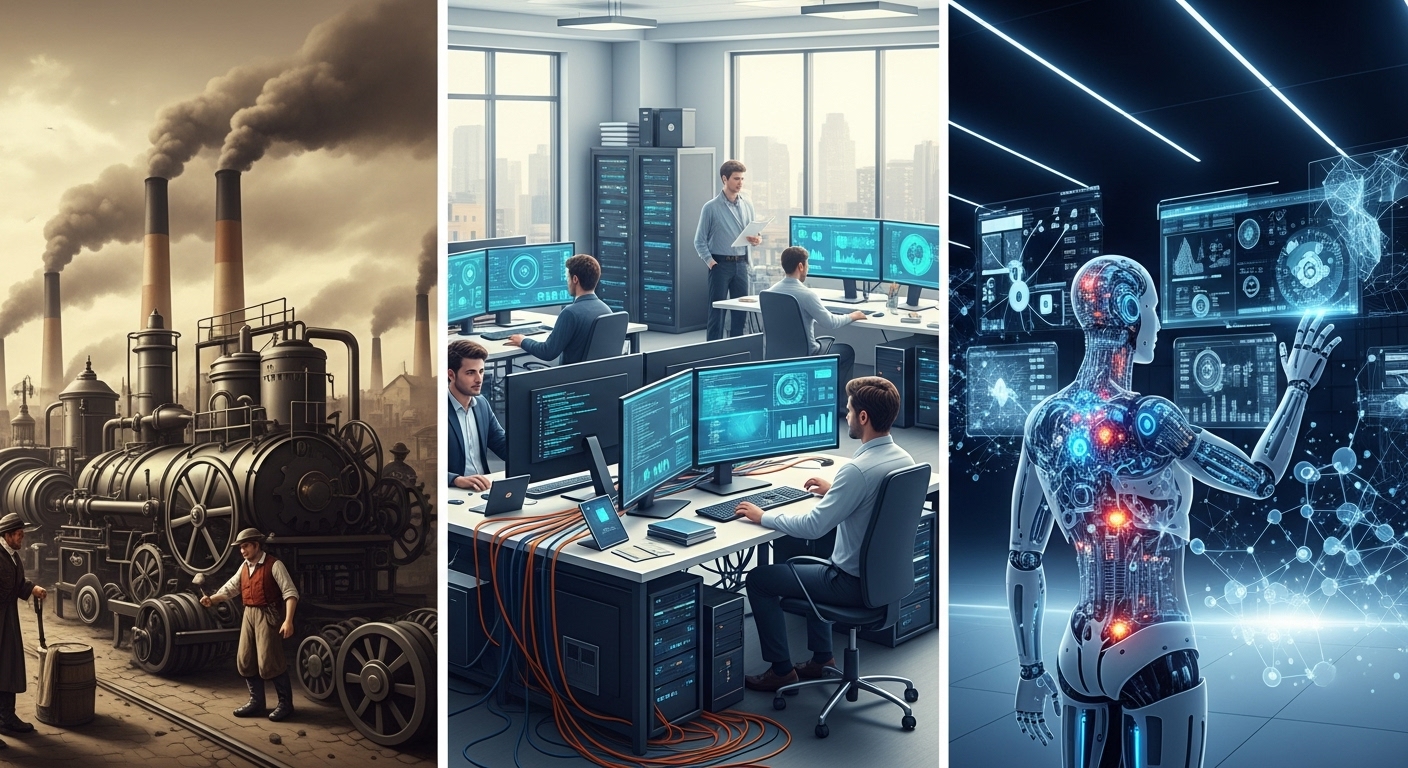

Technology has become the backbone of modern civilization, transforming the way we communicate, work, learn, and live. From the invention of the wheel to the rise of artificial intelligence, human ingenuity has consistently pushed the boundaries of what is possible. Today, technology is not just a tool but an integral part of our daily lives, influencing every aspect of society. This blog explores the multi-faceted world of technology, its innovations, impacts, and future trends.
The Roots of Modern Technology
Understanding modern technology requires a glance at its historical roots. Early humans developed tools from stones and wood to perform essential tasks more efficiently. The industrial revolution marked a pivotal shift, introducing mechanized systems that replaced manual labor. Steam engines, telegraphs, and electricity laid the groundwork for the technological advancements we see today. Each invention not only served practical purposes but also catalyzed societal changes, enabling new industries, improving productivity, and expanding human potential.
With the advent of computers in the 20th century, technology entered a new era. The first computers were massive machines capable of performing calculations at unprecedented speeds. Over time, they became smaller, more powerful, and accessible, giving rise to the digital age. The development of the internet in the late 20th century further revolutionized how people interact, communicate, and conduct business, making information more democratized than ever.
Artificial Intelligence and Machine Learning
Among the most transformative technologies today is artificial intelligence (AI). AI refers to the simulation of human intelligence in machines that can learn, reason, and solve problems. Machine learning, a subset of AI, allows systems to learn from data without explicit programming. These technologies are no longer confined to research labs—they permeate industries ranging from healthcare to finance, transportation, and entertainment.
In healthcare, AI algorithms analyze massive datasets to detect diseases at earlier stages, predict patient outcomes, and even assist in surgical procedures. In finance, AI enhances fraud detection, predicts market trends, and automates trading strategies. Autonomous vehicles leverage AI to interpret real-time data from sensors, enabling safer and more efficient navigation. Even everyday applications, such as voice assistants and recommendation systems, rely heavily on AI and machine learning.
The rapid adoption of AI raises ethical and societal questions. Issues of bias, transparency, and accountability in AI systems have sparked debates among technologists, policymakers, and ethicists. Ensuring that AI serves humanity responsibly is as important as the technological breakthroughs themselves.
The Internet of Things: Connecting the World
The Internet of Things (IoT) represents another transformative shift, connecting everyday devices to the internet and allowing them to communicate with each other. From smart homes to industrial automation, IoT is creating a highly interconnected ecosystem that enhances efficiency, convenience, and data-driven decision-making.
Smart homes illustrate the consumer-facing impact of IoT. Devices such as thermostats, security cameras, and lighting systems can be controlled remotely through smartphones or voice commands. These devices not only improve comfort and safety but also optimize energy consumption, reducing environmental footprints. In industrial contexts, IoT sensors monitor machinery, detect anomalies, and schedule maintenance, minimizing downtime and operational costs.
However, the expansion of IoT raises concerns about privacy and cybersecurity. The sheer number of connected devices increases vulnerability to cyberattacks, making robust security protocols essential. Balancing convenience with security is a critical challenge for the ongoing adoption of IoT technology.
Cloud Computing: Powering the Digital Economy
Cloud computing has redefined how individuals and organizations access and manage computing resources. Instead of relying on local servers and hardware, cloud computing provides on-demand access to computing power, storage, and applications over the internet. This shift enables scalability, cost-efficiency, and collaboration on a global scale.
Businesses leverage cloud platforms to deploy applications, manage data, and support remote workforces. Cloud computing facilitates big data analytics by providing the computational resources required to process large datasets. It also supports the deployment of AI and machine learning models, accelerating innovation and reducing barriers to entry for startups and small businesses.
The rise of cloud computing has also influenced how software is delivered. Software-as-a-Service (SaaS) models allow users to access applications without installation, while Platform-as-a-Service (PaaS) and Infrastructure-as-a-Service (IaaS) provide developers with tools to build, deploy, and manage applications efficiently. The cloud economy continues to grow, fueling the digital transformation of industries worldwide.
Cybersecurity: Protecting the Digital Frontier
As technology advances, so do the threats that accompany it. Cybersecurity has become a critical concern for individuals, organizations, and governments alike. Cyberattacks range from data breaches and ransomware to phishing scams and state-sponsored cyber espionage. Protecting sensitive information requires a multi-layered approach, combining technical safeguards with user education and policy enforcement.
Advanced cybersecurity solutions leverage AI to detect anomalies, predict potential threats, and respond to attacks in real time. Encryption technologies ensure that data remains secure during transmission and storage. Multi-factor authentication adds an extra layer of protection for user accounts. Despite these measures, human error remains a significant vulnerability, highlighting the importance of ongoing awareness and training.
The stakes of cybersecurity extend beyond financial losses; breaches can compromise personal privacy, national security, and critical infrastructure. As the digital ecosystem grows more complex, the demand for skilled cybersecurity professionals and innovative defense strategies continues to rise.
Blockchain Technology: Beyond Cryptocurrency
Blockchain, the underlying technology behind cryptocurrencies, has applications far beyond digital money. A blockchain is a decentralized, immutable ledger that records transactions securely and transparently. Its potential spans finance, supply chain management, healthcare, and governance.
In finance, blockchain facilitates faster, cheaper, and more secure transactions. Decentralized finance (DeFi) platforms leverage blockchain to provide financial services without traditional intermediaries. In supply chains, blockchain ensures transparency by tracking the journey of products from origin to consumer, reducing fraud and inefficiency. In healthcare, blockchain can securely store and share patient records, ensuring privacy and interoperability.
Despite its promise, blockchain faces challenges, including scalability, energy consumption, and regulatory uncertainty. Nevertheless, ongoing research and innovation continue to expand its practical applications, making it a cornerstone of the future digital economy.
Emerging Technologies Shaping the Future
Beyond AI, IoT, cloud computing, and blockchain, several emerging technologies are poised to redefine industries and society.
Quantum Computing
Quantum computing leverages the principles of quantum mechanics to perform computations far beyond the capabilities of classical computers. By exploiting superposition and entanglement, quantum computers can solve complex problems in cryptography, optimization, and material science. While still in the experimental stage, quantum computing holds the potential to revolutionize research, logistics, and data analysis.
Augmented Reality and Virtual Reality
Augmented reality (AR) and virtual reality (VR) are transforming how we experience the world. AR overlays digital information onto the physical environment, enhancing real-world interactions. VR immerses users in entirely virtual environments, enabling new forms of entertainment, education, and training. From gaming to medical simulations, AR and VR are unlocking creative possibilities across sectors.
5G Technology
The rollout of 5G networks promises unprecedented speed, low latency, and massive connectivity. 5G enables real-time applications such as autonomous vehicles, remote surgeries, and immersive gaming experiences. Its impact extends beyond mobile communication, driving innovation in smart cities, industrial automation, and the IoT ecosystem.
Renewable Energy Technologies
Technological advancements in renewable energy, such as solar, wind, and energy storage systems, are crucial in addressing climate change. Smart grids, powered by AI and IoT, optimize energy distribution and consumption, reducing waste and enhancing efficiency. Innovations in battery technology and energy storage are making renewable sources more reliable and scalable.
Technology and Society: Transformative Impacts
The influence of technology on society is profound and multifaceted. It reshapes economies, culture, communication, and daily life, creating both opportunities and challenges.
Work and Productivity
Technology has transformed the workplace, automating repetitive tasks and enabling remote collaboration. Tools such as project management software, cloud platforms, and communication apps enhance efficiency and connectivity. However, automation also raises concerns about job displacement, requiring workforce reskilling and adaptation to new roles.
Education and Learning
Digital technology has revolutionized education, providing access to online courses, virtual classrooms, and educational resources. Adaptive learning systems and AI tutors personalize education, catering to individual learning styles and needs. Technology democratizes knowledge, bridging gaps in access and enabling lifelong learning.
Communication and Social Interaction
Social media, messaging apps, and video conferencing platforms have redefined communication. They connect people globally, facilitate information sharing, and enable collaborative work. At the same time, concerns about misinformation, online harassment, and digital addiction highlight the need for responsible technology use.
Health and Well-Being
Healthcare technology has improved diagnosis, treatment, and patient care. Wearable devices monitor vital signs, telemedicine expands access to healthcare services, and AI-driven tools enhance medical research. Technology empowers individuals to take control of their health, promoting preventive care and personalized treatment.
Challenges and Ethical Considerations
With great technological power comes significant responsibility. Ethical considerations are central to ensuring that technology benefits society without causing harm.
Privacy and Data Security
The proliferation of digital devices generates vast amounts of personal data. Protecting privacy and ensuring responsible data use is a growing concern. Regulations such as data protection laws aim to safeguard individual rights, but ethical vigilance remains crucial.
Bias and Fairness
AI systems can inherit biases from training data, leading to unfair outcomes. Addressing bias and ensuring fairness in technology requires transparency, accountability, and ongoing monitoring. Ethical design and inclusive development practices are essential to mitigate these risks.
Environmental Impact
Technological innovation can have unintended environmental consequences, from electronic waste to energy-intensive data centers. Sustainable design, energy efficiency, and circular economy principles are critical to minimizing technology’s ecological footprint.
The Road Ahead: A Technological Future
The future of technology is both exciting and unpredictable. Advancements in AI, quantum computing, biotechnology, and renewable energy promise to reshape industries, solve complex problems, and enhance human capabilities. At the same time, the responsible deployment of technology requires ethical foresight, regulatory frameworks, and global collaboration.
As technology continues to evolve, society must navigate the balance between innovation and responsibility. Embracing technological progress while addressing its challenges will determine how effectively humanity leverages its tools to create a better, more equitable, and sustainable world.
Technology is no longer just a tool; it is a lens through which we view the world, a force shaping our daily lives, and a catalyst for human progress. By understanding its past, engaging with its present, and thoughtfully anticipating its future, we can harness technology to unlock new possibilities, solve pressing challenges, and redefine what it means to live in an interconnected, intelligent, and rapidly evolving world.