
Introduction: Embracing the Digital Revolution
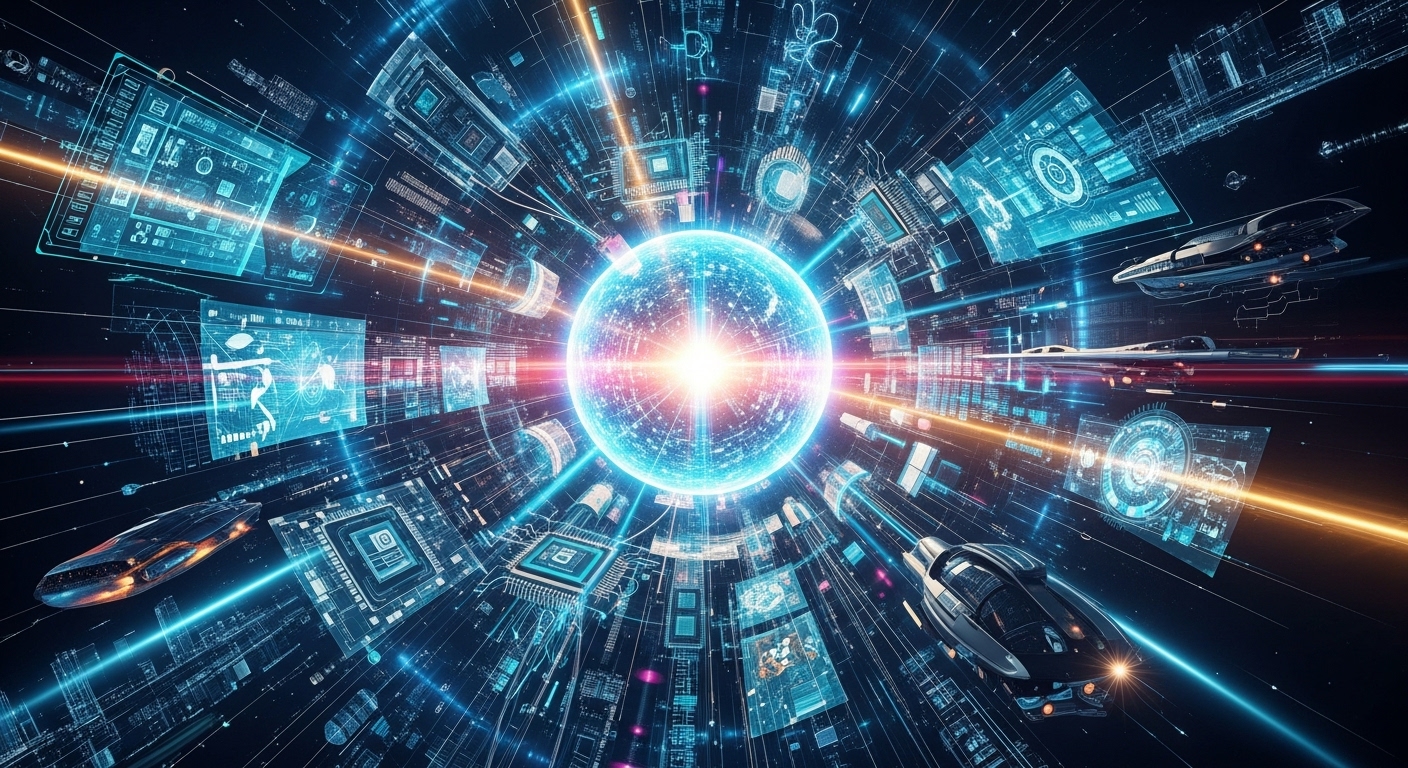
The pace of technological innovation has accelerated to an astonishing rate in recent years. What seemed like science fiction just a few decades ago is now an integral part of our daily lives. From artificial intelligence (AI) to blockchain, quantum computing to biotechnology, technology is reshaping industries, transforming economies, and altering the very fabric of society. But what does the future hold? How are these technological advancements not only impacting the present but also defining the world of tomorrow? This blog explores how technology is influencing every facet of our lives and what we can expect in the years to come.
1. Artificial Intelligence: The Brain Behind Innovation
AI has been one of the most transformative forces in the tech world. Today, AI systems are capable of processing vast amounts of data, making decisions, and even predicting future outcomes with remarkable accuracy. This is revolutionizing industries like healthcare, finance, education, and even entertainment. Machine learning, a subset of AI, enables systems to improve from experience, leading to smarter applications every day.
In healthcare, AI is assisting doctors by analyzing medical records and diagnosing diseases faster than ever before. In the business world, AI-driven algorithms predict customer behavior, helping companies offer personalized services and products. As AI continues to evolve, we can expect it to further infiltrate our personal and professional lives, automating tasks, improving efficiency, and unlocking new potential for innovation.
2. The Rise of Quantum Computing: A Game Changer for Problem-Solving
While AI is making strides in everyday applications, another emerging field—quantum computing—holds the potential to tackle problems that traditional computers simply cannot. Quantum computers leverage the principles of quantum mechanics to process information in a fundamentally different way. Instead of using bits (0s and 1s), they use quantum bits or qubits, which can exist in multiple states at once, allowing for exponentially greater computing power.
This could revolutionize fields such as cryptography, drug discovery, and climate modeling. Imagine simulating complex molecules to discover new drugs in a fraction of the time it would take today, or solving intricate problems related to global climate change. While quantum computing is still in its infancy, the promise of its potential is already sparking intense research and investment, indicating a future where these machines could change the very core of how we approach problem-solving.
3. Blockchain Technology: More Than Just Cryptocurrency
When most people hear the word “blockchain,” their minds immediately jump to Bitcoin or other cryptocurrencies. However, the true potential of blockchain goes far beyond digital currencies. At its core, blockchain is a decentralized ledger technology that enables secure, transparent, and tamper-proof transactions.
Beyond cryptocurrency, blockchain has the potential to revolutionize supply chain management, voting systems, real estate transactions, and even identity verification. In industries like logistics, blockchain can improve traceability and transparency, making the entire supply chain more efficient and less prone to fraud. In government and legal systems, blockchain could create more secure ways to track voting and legal documents, making processes more transparent and reducing corruption.
4. The Internet of Things (IoT): Connecting the World
The Internet of Things (IoT) is transforming how we interact with the physical world. From smart homes to wearable devices, IoT is allowing objects to connect to the internet and exchange data in real time. This creates a seamless ecosystem where devices can communicate, learn, and adapt to user preferences, leading to greater convenience and efficiency.
For example, IoT-enabled devices in homes can automatically adjust lighting, heating, and security settings based on the user’s habits, creating a more comfortable and energy-efficient living space. In industries such as manufacturing and agriculture, IoT can help monitor equipment and conditions in real-time, preventing downtime and improving productivity. As IoT devices continue to proliferate, we will see a smarter, more interconnected world where data drives decision-making across virtually all sectors.
5. Biotechnology: Merging Tech and Biology for a Healthier Future
Biotechnology is another field that stands to be dramatically influenced by technological advancements. The ability to manipulate biological systems for medical and agricultural purposes has existed for decades, but recent technological innovations are taking biotech to new heights. From CRISPR gene editing to synthetic biology, the potential for biotechnology to revolutionize healthcare and the environment is vast.
In medicine, personalized treatments based on genetic data are becoming a reality, enabling doctors to tailor treatments to individual patients for more effective outcomes. In agriculture, genetic engineering and biotech are helping to create crops that are more resistant to disease, pests, and environmental changes. As biotech continues to evolve, it could lead to breakthrough treatments for previously incurable diseases, and even potentially extend human lifespan.
6. The Evolution of Virtual Reality (VR) and Augmented Reality (AR)
Virtual reality (VR) and augmented reality (AR) are no longer the stuff of science fiction. These technologies are already changing how we experience the world, from entertainment to education to professional training. VR immerses users in entirely digital environments, while AR overlays digital information onto the real world, enhancing the physical environment with virtual elements.
In gaming, VR provides a completely immersive experience, while AR enhances mobile apps by allowing users to interact with their surroundings in new ways. In education and training, VR and AR are being used to simulate real-world environments for hands-on learning without the risk or expense of real-world experimentation. In the workplace, these technologies can be used for virtual collaboration, training, and product design, reducing travel costs and improving productivity. As both VR and AR technology improves, the line between the digital and physical worlds will continue to blur.
7. The Future of Connectivity: 5G and Beyond
As technology continues to evolve, so too does our need for faster, more reliable internet connections. Enter 5G—the next generation of mobile network technology that promises lightning-fast download speeds, low latency, and the ability to support an exponentially larger number of connected devices.
With 5G, industries like autonomous vehicles, telemedicine, and smart cities will thrive, thanks to the network’s ability to handle massive amounts of data with minimal delay. 5G will also help support IoT, as more devices will be able to stay connected at all times. But the possibilities don’t end with 5G; the development of 6G, 7G, and beyond will further enhance global connectivity, leading to a world where instant communication and real-time data exchange are the norms.
Conclusion: A Glimpse into Tomorrow
The future of technology is a vast and ever-expanding landscape. From AI to biotechnology, blockchain to quantum computing, the innovations on the horizon promise to reshape nearly every aspect of our lives. While these advancements hold incredible promise, they also come with their own set of challenges—ethics, privacy, security, and the digital divide must all be carefully managed.
As we move forward, one thing is clear: the world of tomorrow will be vastly different from the world we know today. Technology will continue to drive change, and how we adapt to these shifts will define our future. The future is now, and it’s up to us to embrace it responsibly and innovatively.